Field: Electromagnetic waves
Joined in: 2013Kazumasa Sakurai


Some of SOKEN’s associates came directly from postdoctoral research, bringing their expertise as a strength in their new roles.
We talked with three PhDs who made the leap from academia to industry, asking what led them to change careers, what challenges they faced and overcame, and where they now find meanings in their work. Here are their stories in their own words.
Field: Electromagnetic waves
Joined in: 2013「From Optics to Electromagnetics: A PhD’s Journey into Unknown Territory」
Field: Power Conversion
Joined in: 2019「From Academia to Corporate Research: How Perseverance Shaped My Career」
Field: Carbon Neutrality
Joined in: 2023「Exploring the Invisible: The Childhood Curiosity That Started It All」
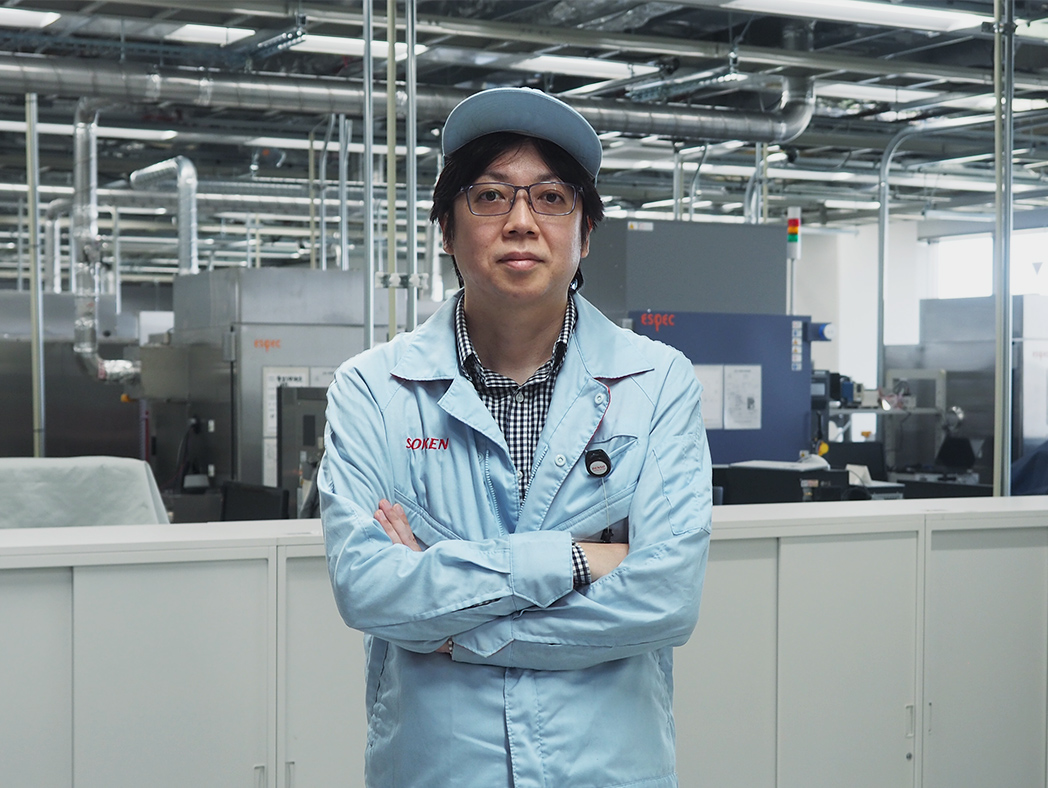
Field: Electromagnetic waves|Joined in: 2013|Kazumasa Sakurai
From a young age, I loved creating things—whether woodworking, building plastic models, or racing Mini 4WD. In high school, a friend inspired me to secretly take apart household electronics to understand how they worked (always putting them back together, of course).
These experiences naturally fueled my interest in engineering, leading me to study electrical engineering at university. While I explored software, I was most drawn to hands-on hardware, so I focused on developing semiconductor optical devices in the lab. I spent years experimenting to integrate semiconductor lasers and optical isolators, essential components for optical communications. Earning my PhD took more than three years due to setbacks, but that persistence shaped the way I approach challenges today. It was through these difficulties that I learned to never give up and keep pushing forward.
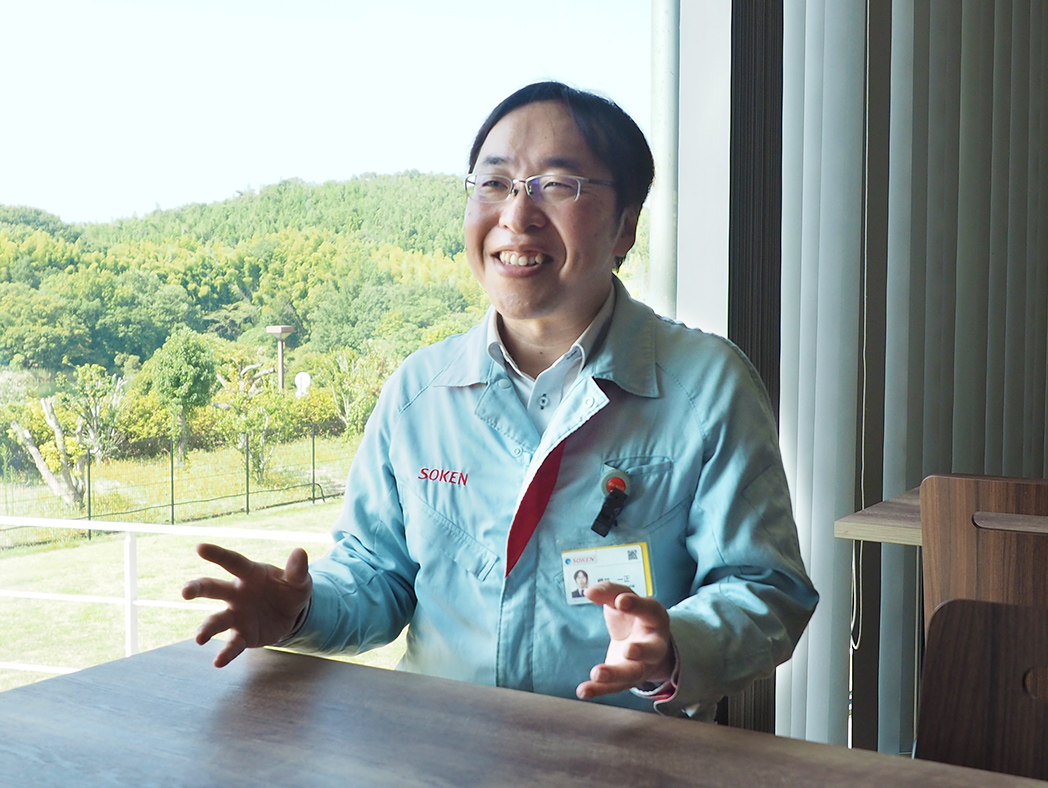
After earning my doctorate, I stayed on at the university as a researcher. But over time, I began to struggle with the realization that my work wouldn’t have an immediate impact on society. That’s when I started thinking: What if I could apply my research skills in a setting closer to real-world needs?
I considered opportunities with semiconductor equipment manufactures and optical communications companies, but what drew me to SOKEN was the chance to be deeply involved not only in design, but also in research and development. That balance convinced me to make the leap.
I was placed in the high-frequency field—an entirely new domain compared to optics—focusing on much lower-frequency radio waves. Yet the unfamiliarity didn’t discourage me; if anything, it fueled my excitement for the challenge ahead.
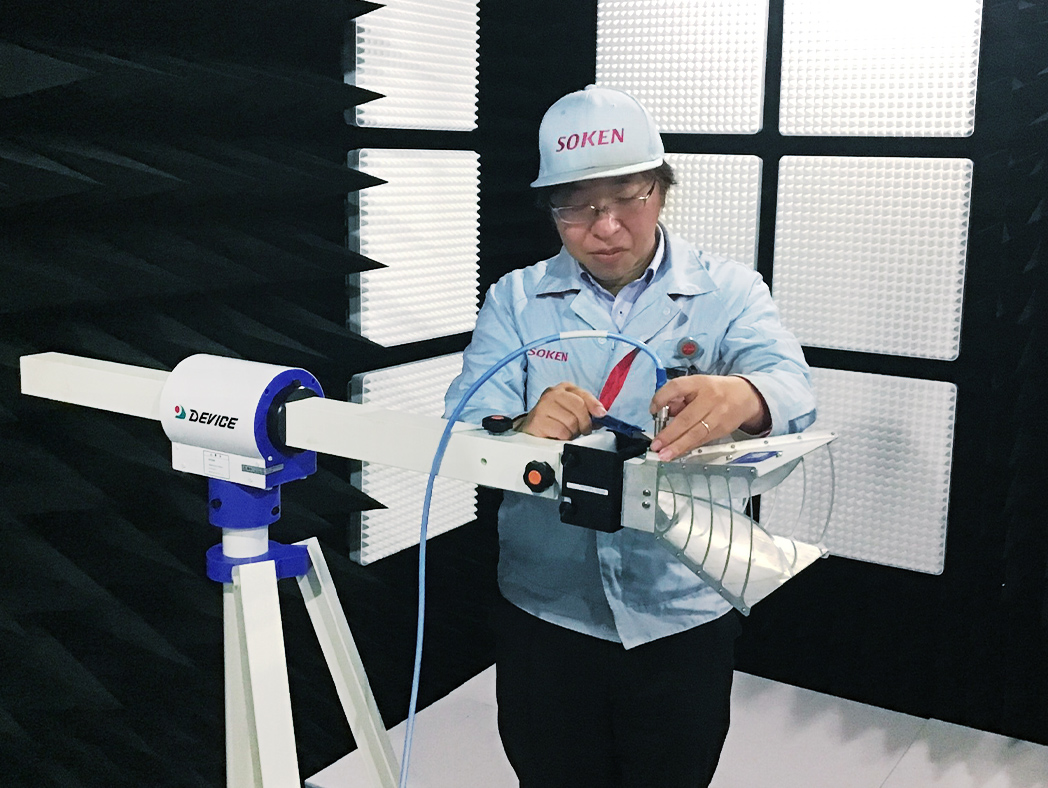
At SOKEN, I’ve been involved in developing products that use electromagnetic waves, such as millimeter-wave radar and wireless communication systems. At first, I was surprised—the components were large enough to be handled manually, a stark contrast to the nanoscale optical devices I’d worked on before.
Light and radio waves are both electromagnetic waves, but the methods for design and testing differ greatly. Initially, I was puzzled by the unique rules of the radio field, but by applying my background in optics and combining it with new approaches, I was able to create original technologies.
In fact, one of those technologies was eventually patented and incorporated into products, which gave me tremendous confidence. Millimeter-wave radar, in particular, is directly tied to improving automotive safety. Seeing my work contribute tangibly to society in ways it couldn’t at the university has been incredibly rewarding.
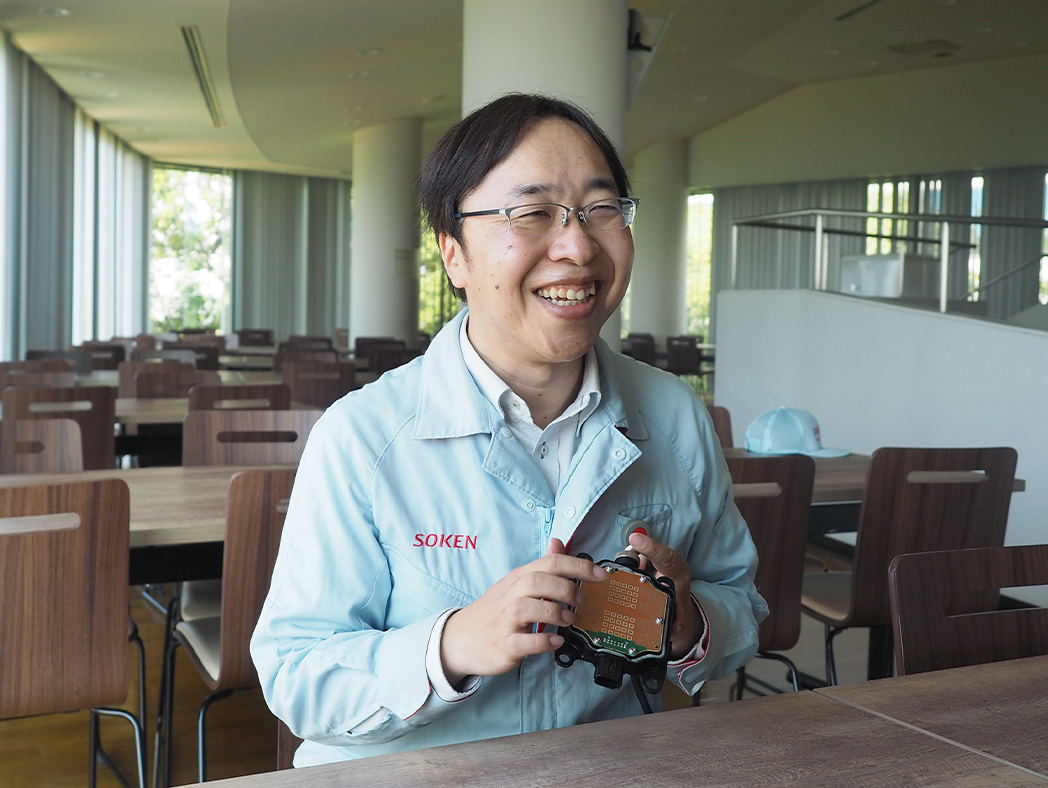
Of course, my work is not without challenges. But I’ve always held onto the mindset: If I’m going to do it, I want to do work that only I can do. Even in widely explored research domains, I pursued a unique approach based on my own perspective.
I believe my strength lies in the accumulation of experiences across different fields. For example, my experience in optical device development using vacuum equipment at university has proven useful in developing dielectric substrates today. Similarly, my knowledge of optical communication has been applied to wireless communication devices.
Every past experiences and hardships are linked to my present, and I hope to keep creating valuable technologies. Moving forward, I’ll continue actively seeking out new knowledge and pursuing research and development that benefits people and society.
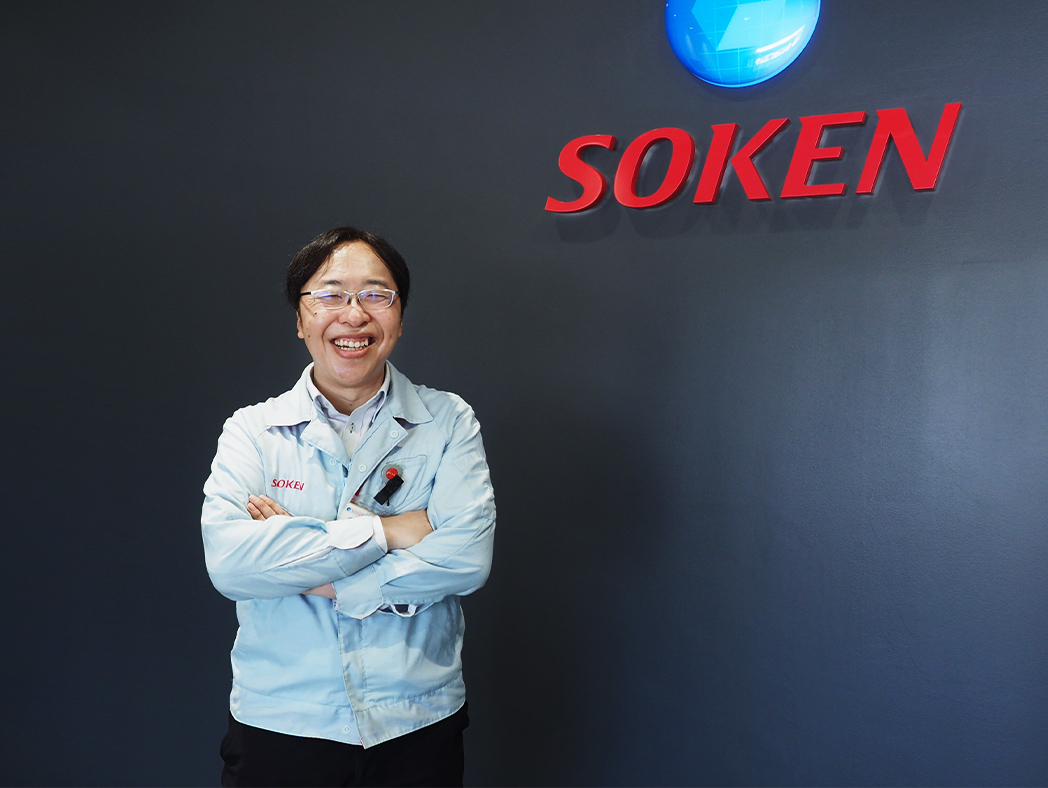
Field: Power Conversion|Joined in: 2019|Kazuma Suzuki
I received my doctorate in electrical and electronic engineering from Nagoya Institute of Technology, specializing in power electronics and power conversion technologies. For my research, I focused on developing compact, high-efficiency technologies for rapid EV chargers, which were just beginning to attract attention at the time. My strong motivation came from the desire to help address a pressing social challenge: the lack of charging infrastructure.
Completing a PhD required managing everything myself—from defining the research topic to overseeing progress and deciding when to pivot. At one point, I accidentally damaged a test circuit just before a paper deadline and spent the entire weekend repairing it. Experiences like this, where I persevered under pressure, continue to guide my work today. The perseverance I developed during my PhD remains my core strength.
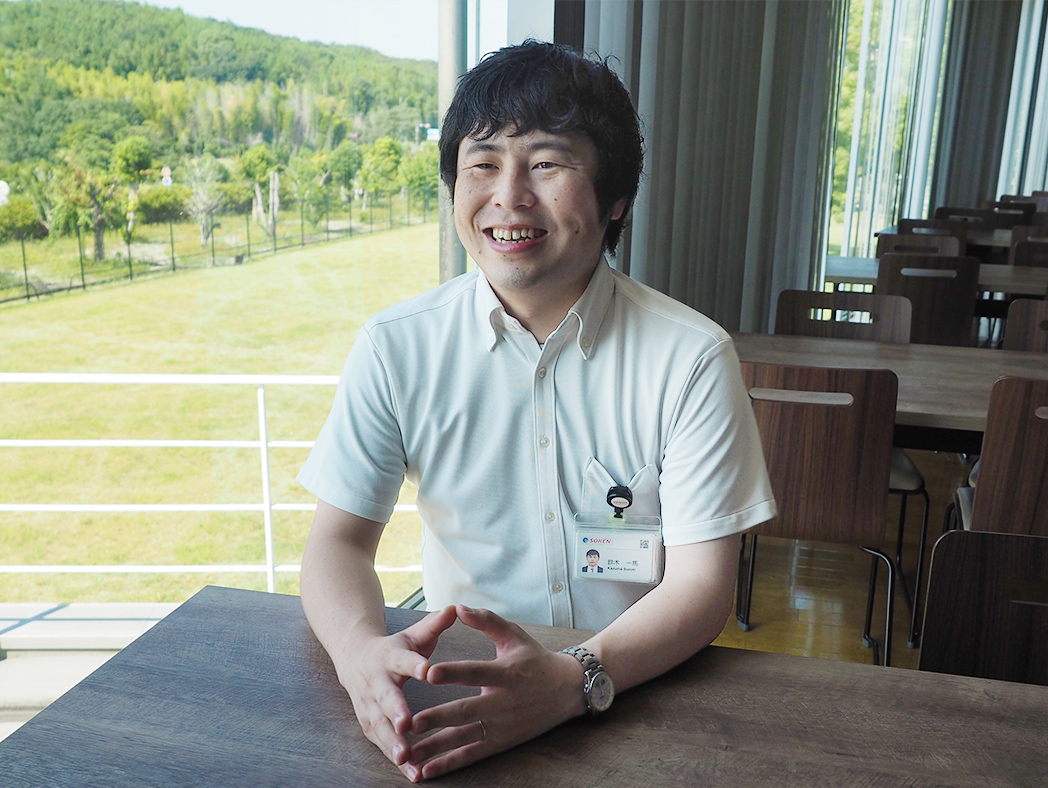
I had always loved research, and after receiving my PhD, I never imagined leaving academia. That changed during a joint research project in my doctoral program, when I met a SOKEN associate who said to me, “You can continue doing research even in industry.” That moment became a turning point.
I was drawn to SOKEN’s approach, where researchers engage in repeated discussions with Toyota and DENSO, plan research themes, and take the lead in development. A simple invitation—“Why not come to SOKEN?”—prompted me to take the leap into a career as a corporate researcher. Had I not been approached then, I might still be on the academic path. I am grateful for that opportunity and view it as a pivotal moment that shaped who I am today.
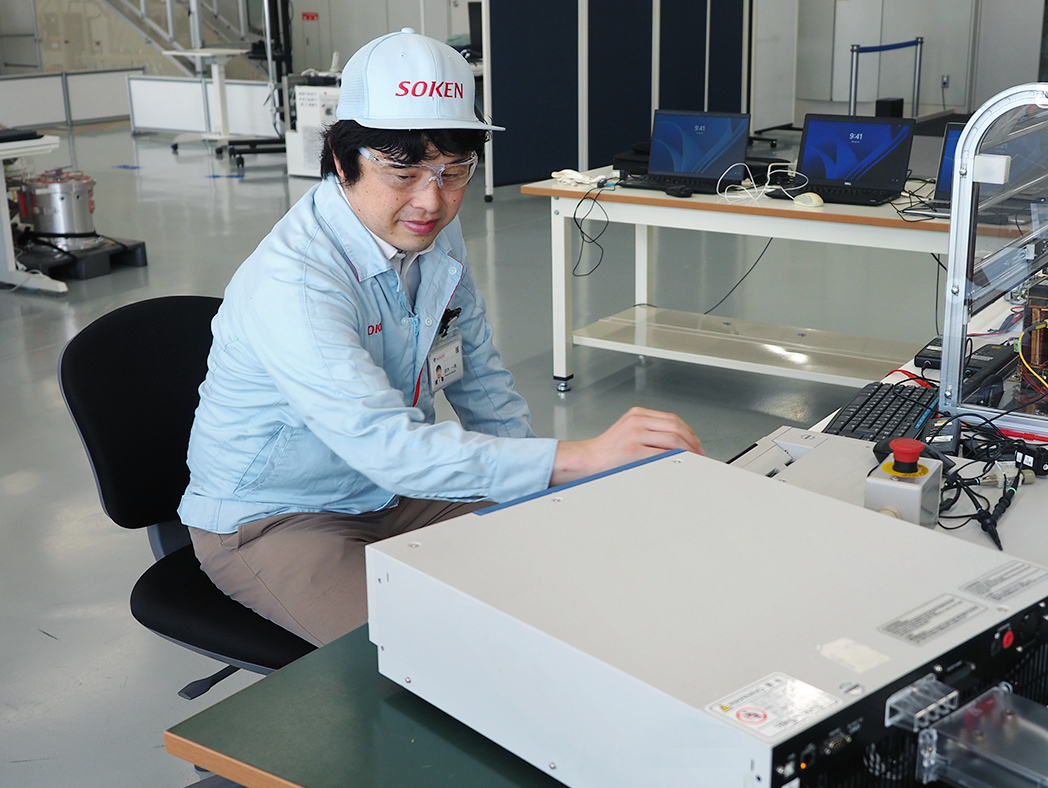
I am currently working on projects commissioned by Toyota and DENSO. My work involves cutting-edge R&D, including developing compact, high-efficiency power converters for electric vehicles and integrating their functions with vehicle systems. There’s nothing quite like the satisfaction of identifying a solution, implementing it, and seeing the results meet expectations.
Corporate research carries a sense of urgency that is different from academia. There is a strong expectation for results, which means setting milestones early on and achieving outcomes efficiently.
One of the most rewarding aspects is seeing a project through from concept to real-world testing in about a year through discussing future technology needs with Toyota and DENSO engineers, defining research themes, and collaborating with stakeholders both inside and outside the company.
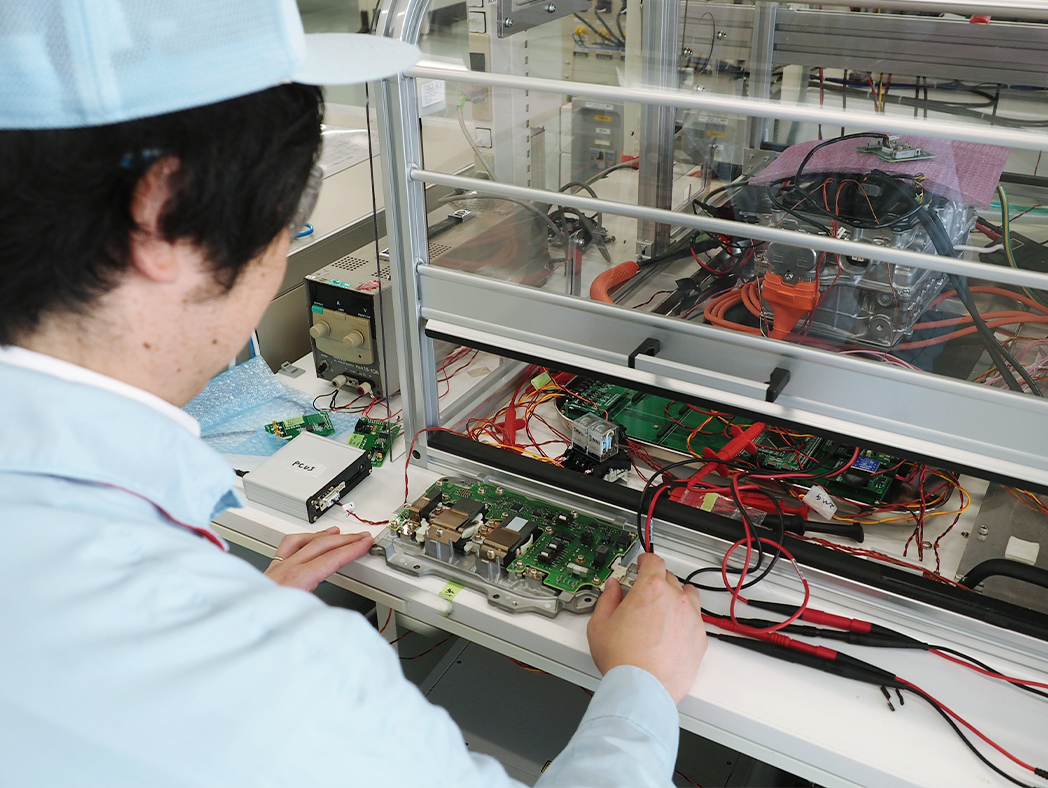
Working in industry as a PhD has made me appreciate the value of having expertise that sets you apart. During my doctoral studies, I had the freedom to focus deeply on technology and on developing myself, without the usual constraints of cost or deadlines. That experience now underpins my confidence and ability to propose new ideas.
SOKEN fosters a culture that welcomes curiosity and the drive to turn ideas into reality. It is a place where you can apply your expertise and see the tangible impact of your work in the real world. If you love research and want to make it your profession, I encourage you to consider a career in corporate research. And if our paths cross, I’d be delighted to work alongside you.
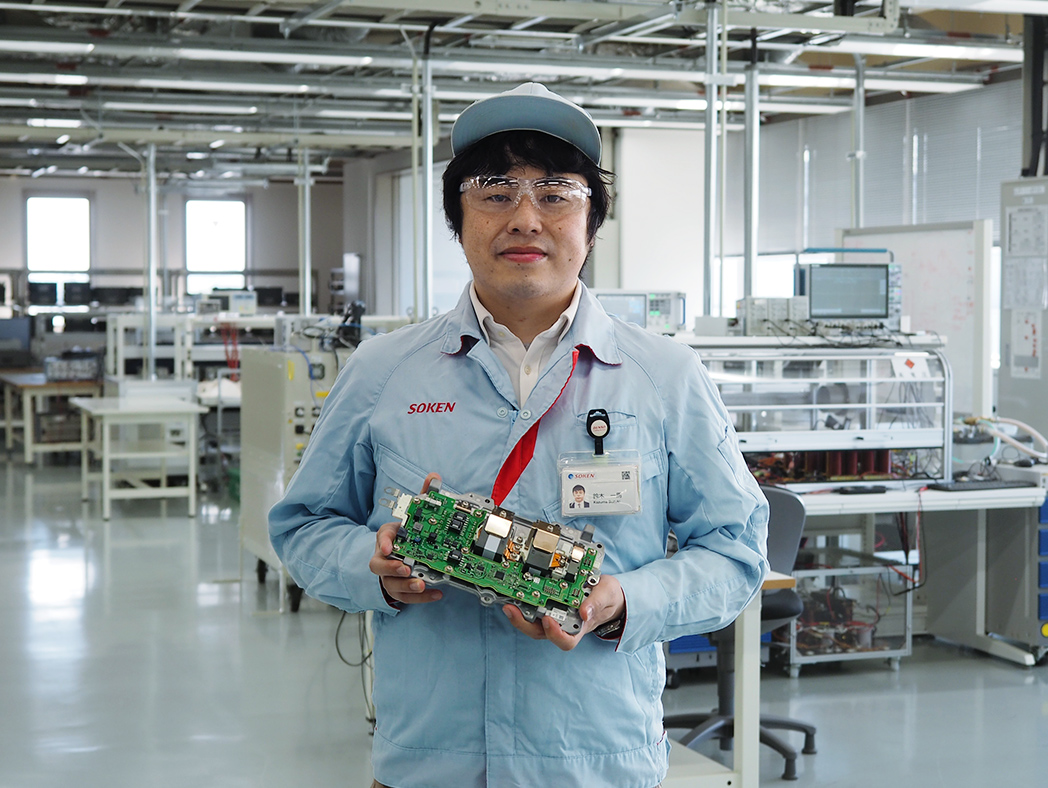
Field: Carbon Neutrality|Joined in: 2023|Masahiko Saito
From a young age, I was captivated by science experiments, and I was always asking “why?” about the world around me. As I learned physics and chemistry in middle and high school, even simple questions—like why water heats up in a microwave—fascinated me, especially when I could understand them through scientific principles. The excitement of uncovering invisible mechanisms brought me toward a career in research.
This enduring curiosity—the drive to ask “why?”—remains at the core of who I am as a researcher and continues to guide my commitment to approach every challenge with dedication.
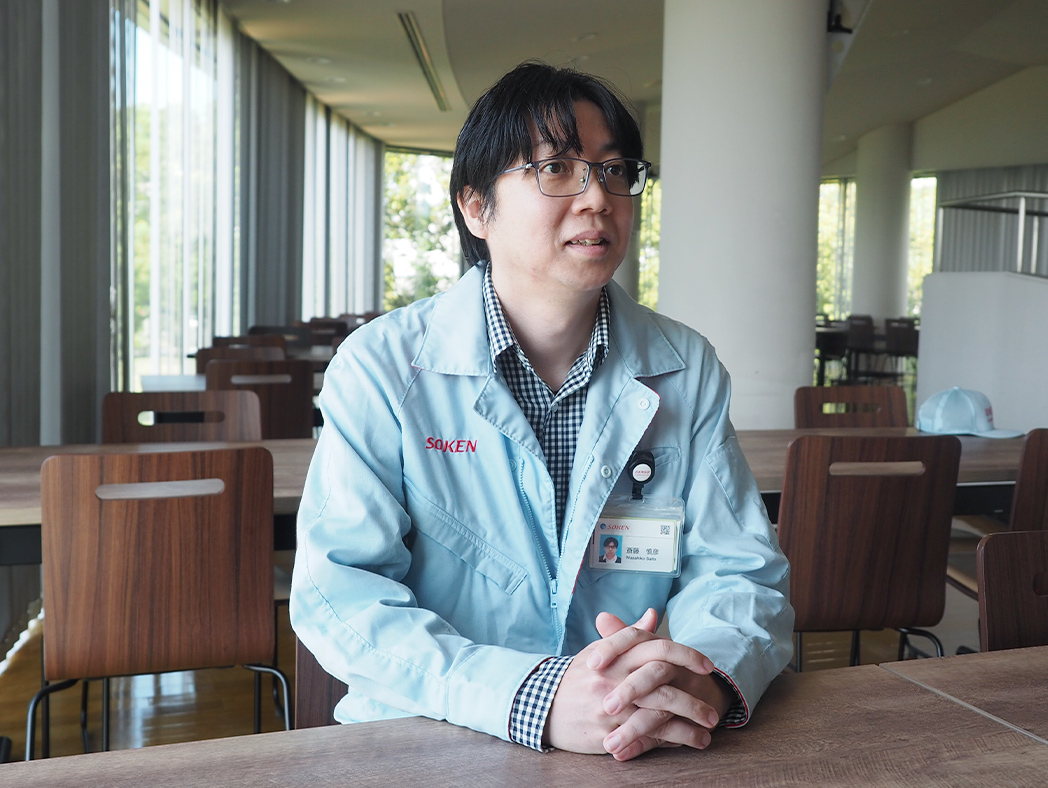
I majored in chemistry during university and graduate school, focusing on the development of organic semiconductor materials based on organic chemistry. Because this work involved material development for applications in solar cells, transistors, and thermoelectric materials—not just organic synthesis—I needed to learn across multiple fields, including analysis, characterization, and device knowledge. Experiments often failed, but revising hypotheses and accumulating data gradually revealed results, which I found both rewarding and exciting.
During my doctoral studies, I also had oppotunity to present at international conferences and to paticipate in joint research projects. Engaging in discussions with researchers from around the world gave me firsthand insight into both the challenges and the excitement of scientific inquiry. I honed logical thinking, analytical skills, and perseverance, making this period one of significant growth in my development as a researcher.
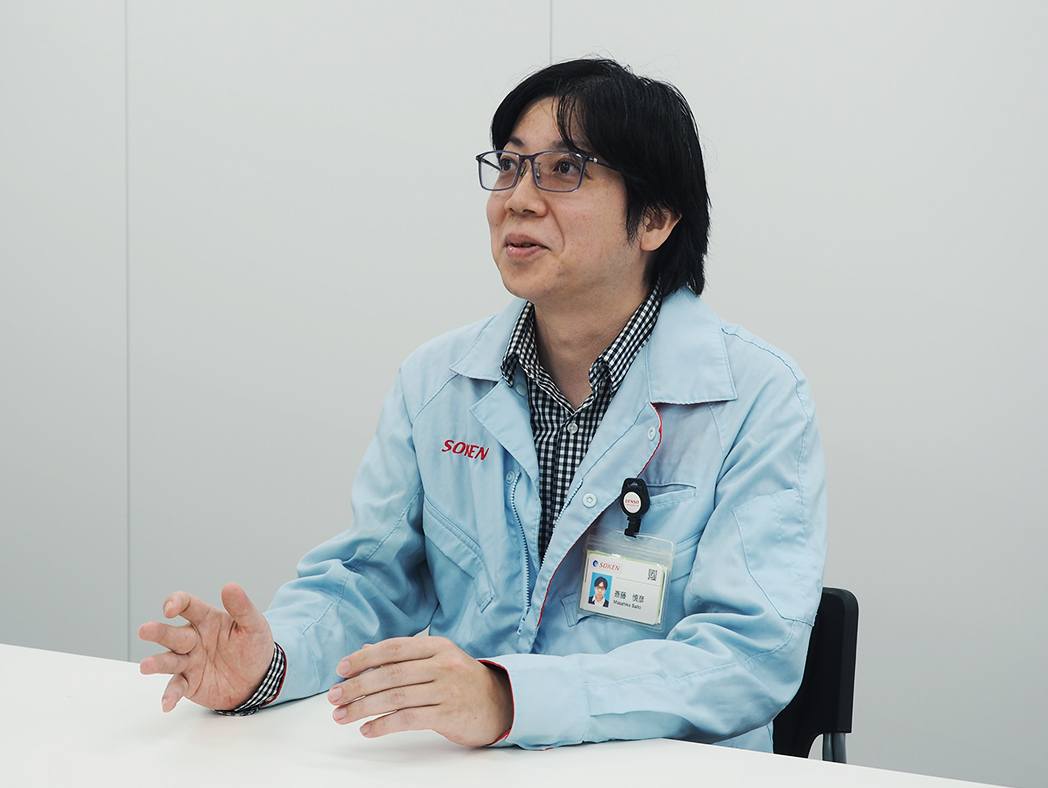
After receiving my PhD, I worked as a researcher at RIKEN and later as an assistant professor at Hiroshima University, engaging in both fundamental and applied research. Over time, however, I felt a growing desire to apply my expertise in a setting closer to real-world product development, and meeting SOKEN became a turning point.
SOKEN offers a broad spectrum of research—from fundamentals to application—while valuing researcher autonomy. Moreover, collaboration with DENSO and Toyota provides a clear route for turning research outcomes into societal applications, which I found especially appealing. I was deeply convinced that SOKEN offers the ideal environment to continue challenging myself as a researcher while directly contributing to society.
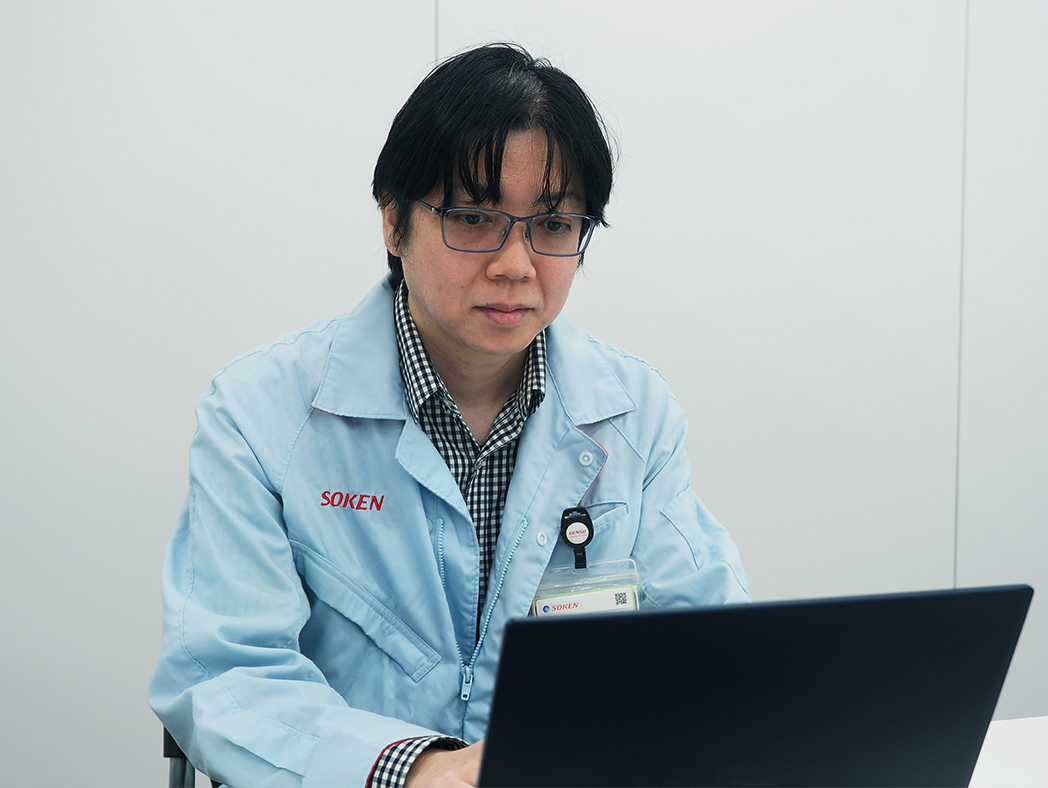
I am currently engaged in developing materials and devices for renewable energy. By combining experiments with simulations, I work toward demonstration testing and serve as a bridge between academia and industry. The carbon-neutral field evolves rapidly, with new technologies often replacing old ones, so it is essential to assess each technology’s strengths, weaknesses, and costs from multiple perspectives. Collaborating with researchers from different disciplines broadens my outlook and allows me to deepen my work by leveraging the expertise I gained in academia.
SOKEN provides an environment where research is pursued with real-world implementation in mind, offering the satisfaction of contributing to a sustainable future. For those eager to continue pushing the boundaries as researchers, this field offers an opportunity to help shape the future together.